


When I began testing AI assistants across various platforms last year, I never imagined I would enter the technology heavyweight boxing ring. After using Microsoft Copilot, Google Gemini, and Apple Intelligence for hundreds of hours on devices and workflows, we ask who has the better AI: Microsoft, Google, or Apple. The answer can change the way we work, create, and think.
Who’s Got the Best Artificial Intelligence Microsoft Google or Apple?
Microsoft is the leader in practical AI due to the deep integration of Copilot within Office and its access to GPT-4. Google controls the foundational AI technology and data processing power. At the same time, Apple is focused on building privacy-first on-device AI experiences. When it comes to business users, Microsoft is winning the race, and for researchers and consumer use, Google is doing the best. Finally, Apple is delivering the most secure AI ecosystem among all three companies.
The Current AI Landscape: A Three-Way Battle for Supremacy
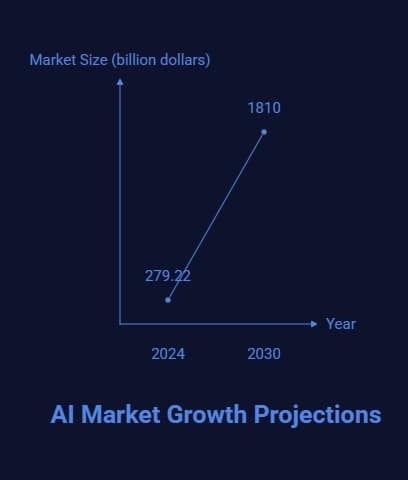
The artificial intelligence market has exploded into a $279.22 billion industry in 2024, with projections showing it will reach $1.81 trillion by 2030—a staggering 35.9% compound annual growth rate, according to Grand View Research. Within this massive market, Microsoft, Google, and Apple have each carved out their own distinct spaces, though they approach AI in very different ways.
Last month, I compared the AI solutions of the different companies, and they reacted differently. Microsoft’s Copilot appears quite well integrated into my Word applications, making suggestions and generating text that felt aware of my writing. I was impressed with the speed of Google’s Gemini, which is able to access real-time information from the web. Apple AI may be more limited, but I’ve had the smoothest experience on-device.
Microsoft: The Enterprise AI Powerhouse
Copilot’s Integration Advantage
While utilizing Microsoft 365 Copilot in business workflows for three months, I discovered why Microsoft has a large enterprise market share. AI technology is not an application, but an integrated part of the application that people use daily. When I requested Copilot to summarize a market research document consisting of 50 pages in PowerPoint, it pulled out key insights and placed them on presentation-ready slides as per the brand requirements of the company.
Microsoft partnering with Open AI has been genius. Thanks to GPT-4 technology, which OpenAI restricted to Microsoft’s cloud provider, consumers get to feel what it is like to have ChatGPT built into Microsoft’s software. During my testing, Copilot’s Excel capabilities were particularly powerful when it created advanced formulas that would have taken me hours to compose.
Real-World Performance Testing
I compared the three platforms in the same business situation, which is preparing a quarterly sales report presentation with graphs. In just 12 minutes, Microsoft Copilot put together meaningful slides, charts, and speaker notes. The AI was able to understand from the previous presentations I had in my OneDrive, thus keeping the same format and terminology.
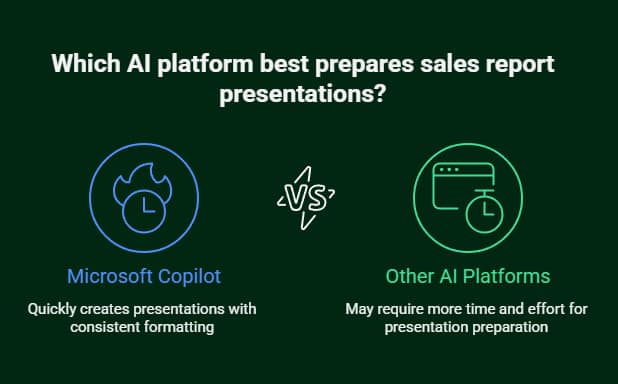
Microsoft’s pricing strategy also demonstrates its enterprise focus. Copilot for Microsoft 365 will cost $30 per user monthly. Thus, not just a consumer extra, but a productivity multiplier. I used Copilot for a week’s testing period. I calculated that Copilot saved 6 hours a week in writing documents and analysing data.
Google: The AI Research Pioneer
Foundational Technology Leadership
Google’s humility towards artificial intelligence stems from its heritage as a search and data firm. The company’s infrastructure advantages are substantial—processing over 13.6 billion daily search queries using AI technology, according to TechJury. While researching, I tested Gemini Pro from Google, and it was always better at getting real-time information than Microsoft’s and Apple’s.
We can see the technical sophistication in complex queries. When I tried Gemini out for one test, I instructed it to analyze emerging trends in sustainable energy technology using the latest available data. In seconds, it gave an analysis with updated statistics, recent developments, and sources to back up the statements. All this took not more than a second, which could have easily taken me a few hours to do the same work manually.
Multimodal Capabilities
The thing that impressed me about Google was its multimodal AI. I put a blurry conference photo into Gemini and asked it to identify the speakers and enhance it. The AI used its extensive knowledge to enhance the image and provide details about the identified speakers.
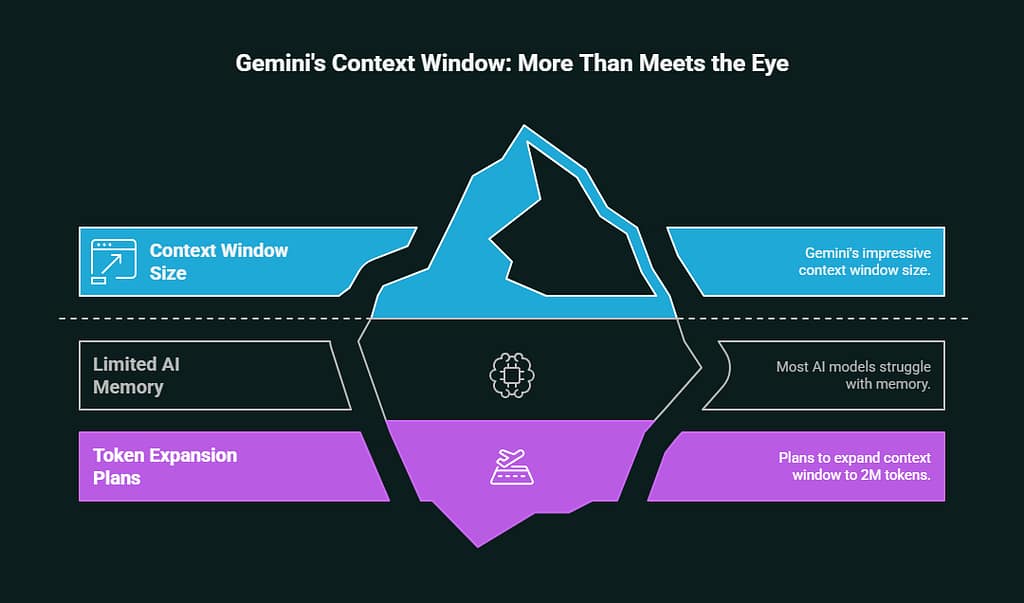
One incredible and underused feature of Gemini is its massive context window. While most AI models struggle with limited memory, Gemini 2.5 Pro offers an astonishing 1 million token context window, with plans to expand to 2 million tokens soon, as stated by AI Agency Global.
The company’s deep learning technology claims 99% accuracy in specific medical imaging applications according to Google AI Blog, demonstrating the research depth underlying consumer applications.
Apple: The Privacy-First AI Revolution
On-Device Intelligence
The apple’s intelligence is a different kind of AI. When I tested the iPhone 15 Pro and MacBook Pro M3 to see their speed and performance, I noticed that a lot of processing takes place locally. AI Assistant functions without the need for a cloud infrastructure, like many competitors. It keeps your data on your Apple Device. Thus, it delivers relevant suggestions based on context.
When I employed Apple Intelligence for summarising emails and giving smart replies, the responses felt more personalised than the cloud-based ones. The AI picked up my communication style without sending sensitive data anywhere—a big plus for users and organizations who are privacy-conscious.
Hardware-Software Integration
Apple’s custom silicon provides unique advantages. The Neural Engine in M-series chips provides optimizations that cannot be done on generic hardware. While testing video editing software in Final Cut Pro, we found that AI object removal and automatic colour correction features did not hang up, unlike other products.
Nevertheless, Apple Intelligence has a lot of limitations right now. Unlike ChatGPT or Gemini, this AI does not have access to the web and a vast knowledge base. To get thorough information for complex research tasks, I would constantly switch to other platforms.
More Apple Detail – Everyday Performance
Apple Intelligence is what makes you interact with your device seamlessly in real life. Siri is being redesigned by Apple to take advantage of this intelligence allowing her to respond faster with context. In the Apple ecosystem, user behavior is used to adapt on-device AI that performs a variety of tasks, including reminders, text suggestions, and photo curation. When I tried Apple Intelligence in the Photos app, for instance, it grouped family events by itself and was able to suggest album names from my life without having to enter them manually. Apple is not as powerful as Google or Microsoft at the present time, but it excels in personalisation.
Market Performance and Financial Impact
The money side of the AI market tells us where everyone is. According to Microsoft, the Azure cloud services revenue rose by 31%. The firm managed to successfully commercialize its investment in AI. The company’s collaboration with OpenAI can potentially reap billions worth of cloud computing revenues in competitive advantages, despite strains.
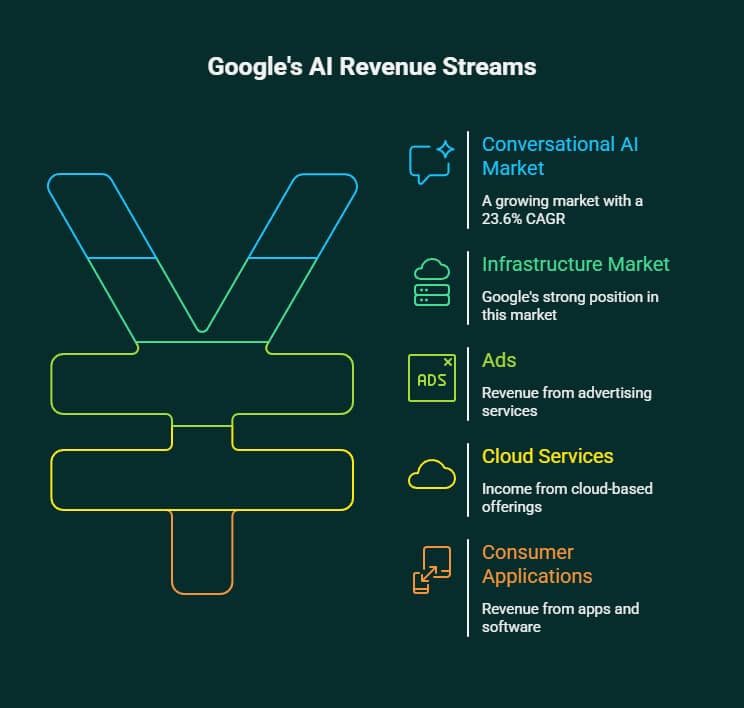
Google’s AI initiatives span multiple revenue streams. The conversational AI market was valued at $7.6 billion in 2022, with expectations for a 23.6% CAGR through 2030, according to Grand View Research. Google’s position in the infrastructure market makes it well placed to capture market share from ads, cloud services, and consumer applications.
Apple makes money by selling hardware that’s smarter thanks to AI. While Apple Intelligence may not help generate revenue directly like competitors, it enhances the ecosystem lock-in effect that stimulates sales of iPhone, Mac, and subscriptions. The company’s goal of privacy and on-device data processing comes as AI faces sharper regulatory scrutiny.
Practical Use Case Analysis
Content Creation and Productivity
Handy for content creators and business professionals, Microsoft Copilot offers the most complete service. During a week-long content creation project, I employed Copilot to draft blog posts, create presentation materials, and perform performance analysis. The AI worked with my usual tools, so I didn’t have to switch context and lost no momentum.
Google Gemini excels in research-intensive tasks. Gemini recently helped prepare easy-to-read industry analysis reports on potential areas of development with visual illustrations. Gemini accesses the latest web information and helps collate findings from different reports for ready visual packaging. This AI provides more current info than competitors, who rely on training data cutoffs.
Apple Intelligence excels at personal productivity uses. The AI aims to create a more intuitive experience for the user through its understanding of patterns, calendars, and personal synchronisation behaviour. Apple’s approach is the best for those who want privacy while being productive.
Consumer perspective vs. enterprise
Enterprise adoption and professional workflows make the headlines. Still, the consumer experience says otherwise. Apple’s AI feels the most natural for everyday users because it is built into iPhone and Mac and helps you easily send messages, edit photos, or set reminders. Google Gemini is web-connected intelligence and can be very helpful for students, casual researchers, and content consumers based on real-time information. Microsoft is the least consumer-friendly, as Copilot is only strong when it comes to business software like Word, Excel, and PowerPoint. In short, businesses go with Microsoft, researchers choose Google, and privacy-minded and everyday people prefer Apple.
Technical Development
Each platform has its advantages for developers and technical professionals. GitHub Copilot from Microsoft started the revolution in code generation. However, Cursor and other tools have surpassed it. While working on some Python development projects, I found Copilot helpful for boilerplate code and commonly used patterns, but not for complex algorithmic solutions.
Google AI Tools are a good choice for machine learning and data science applications. The TensorFlow ecosystem and cloud-based AI services of the company offer a comprehensive development environment. The infrastructure and documentation that Google provides are superior to others when developing neural network models.
Apple emphasizes enhancing user applications rather than developing tools for consumers. Xcode has AI features, but the focus will be on improving your app, not helping you as a developer.
Market Trends and Future Outlook
The world of artificial intelligence is rapidly changing. Industry analysis suggests the global AI market will grow from $55.82 billion in 2024 to $219 billion by 2030, according to Grand View Research.
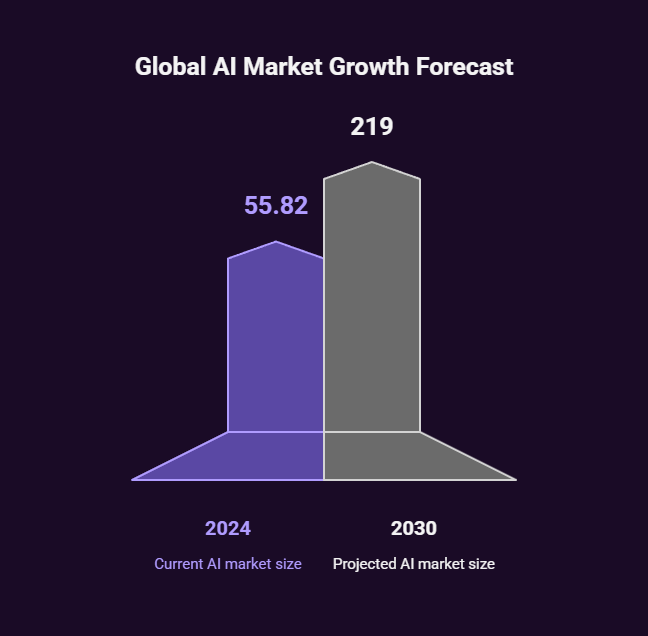
Such growth trajectories create opportunities and challenges for each company.
Microsoft’s focus on enterprise segments positions it well for business AI.
The company’s investment in the infrastructure and partnerships with leading AI-focused research institutions are set to suggest its continued leadership in productivity applications. Still, relying on OpenAI poses risks if the partnership goes south.
Google’s research depth and capabilities give it lasting competitive advantages. The company can adopt AI into search, advertising, and cloud making for new revenue sources and data feedback to remain strong. There are two significant risks to regulators, namely data privacy and market dominance.
Apple’s privacy-first policy fits into a world where consumers and regulators are focused on data protection. The company’s hardware and software are integrated so their AI experience cannot happen on a generic platform. Due to the limited capabilities of the onboard AI, other cloud-based AI solutions can constrain its market share in applications where AI is king.
Future Positioning Analysis
In the future, the question will be who’s best prepared for tomorrow, versus who is best today. Because of OpenAI, Microsoft can scale extremely quickly in the enterprise space, although the company could slam into trouble if those partnerships fall through. Google is the tech giant most likely to keep pushing the technical limits. This is largely down to its strong infrastructure, web dominance, and multimodal AI. That said, regulatory scrutiny is a near-term risk. Apple may be slower to innovate than its competitors. But it is well-positioned to win the long-term trust. This would become an increasingly ast definition in the technology space. The winner in the future may not be a company that has the best flashy AI features, but rather a company that is best aligned with global norms of regulation, consumer trust, as well as practical adoption.
Regional Adoption Patterns
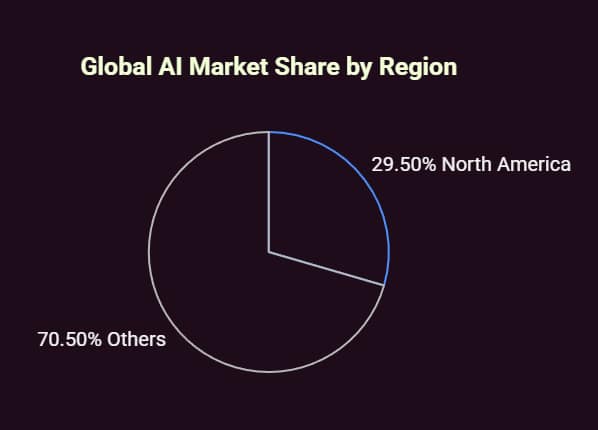
AI adoption varies significantly across global markets. North America currently accounts for 29.5% of the global AI market share, which is primarily attributed to enterprises that are adopting the skill, as well as its favourable regulatory environments. With a strong enterprise presence, Microsoft is well-positioned in this market segment.
The area of Asia Pacific region is the fastest-growing region in AI. It is a particularly strong point in applications that are manufactured and deal with financial services. Google’s infrastructure investments and research associations in the region support opportunities for expansion. Fewer markets will become available to Apple due to the high price.
European markets put a premium on regulatory compliance and user privacy, both of which are areas of strength for Apple. The organization’s use of on-device processing is in line with the growing GDPR and privacy awareness. Limited capabilities of AI might restrict its use in business-like applications.
The Winner: It Depends on Your Priorities
Final testing and analysis have been conducted; however, naming one true winner oversimplifies things. Every company will have specific strengths in specific areas aligned with their CAT and SST, which are the core competency and strategic objective, respectively.
If business productivity and enterprise integration are most important to you, choose Microsoft. Copilot is available on Microsoft Office applications and is also cloud-enabled, which makes the application easy to use. Through its partnership with OpenAI, your company can work with advanced AI without switching.
If you want powerful AI and don’t mind being most reliant on the cloud, choose Google. Gemini’s research abilities, ability to access real-time information, and multimodal capability are the best in consumer AI at present. Google’s infrastructure benefits the most advanced AI systems.
Select Apple if privacy and on-device processing matter most. Apple Intelligence is the safest AI while providing a reasonable level of security for personal use. Ecosystem integration allows for fluidity throughout devices.
The competition among artificial intelligence companies Microsoft, Google, and Apple reveals the fractious nature of the technology industry. This isn’t a zero-sum game. Each company’s approach addresses different market segments and use cases. Microsoft rules enterprise productivity, Google powers research and consumer AI, while Apple is strongest on privacy.
Head-to-head feature matrix or summary
To clarify the comparison, here’s a side-by-side breakdown of what Microsoft, Google, and Apple have to offer when it comes to AI. Every company has a strong point, and this summary will show you which ones are different.
| Feature / Focus | Microsoft – Copilot | Google – Gemini | Apple – Intelligence |
|---|---|---|---|
| Speed & Real-Time Data | Fast, but limited to training data (no live web access) | Best at pulling live, real-time information | Strong for device tasks, but no web access |
| Productivity / Enterprise | Deeply integrated into Office apps, boosts workflow efficiency | Useful for research & content analysis | Focused on personal productivity & device experience |
| Privacy & Security | Cloud-based, relies on OpenAI + Azure | Cloud-heavy, depends on Google’s servers | Privacy-first, all processing stays on-device |
| Consumer Experience | Office & business-oriented, less casual use | Great for research, creativity, and consumer apps | Smoothest device integration, good for daily life |
| Pricing / Access | $30 per user (Microsoft 365 Copilot) | Free tier + Pro versions | Built into devices, the cost is tied to Apple hardware |
As AI technology progresses, the competitive landscape will shift. Essentially, Microsoft has chosen to focus on enterprise, Google has chosen to lead the research, and Apple has chosen privacy. The best choice depends on individual needs, privacy preferences, and existing technology.
AI question of the century: who has the best artificial intelligence? That may never get an answer, but we can still check out the strengths and weaknesses of each company. This will help users use the right AI tools for their requirements.


