

Last month, I did a rollout of Microsoft’s Copilot across our organization. The contrast between our old HR chatbot and this intelligent assistant could not be clearer. Copilot was not a mere upgrade. Our earlier chatbot could do things like password resets and answer policy questions. But it could not answer follow-up questions. Copilot understood context. It could learn from conversations. More importantly, it could actually help employees achieve their goals, completing complex tasks like expense reporting and project planning. This real-life comparison effectively depicts the decision organizations will face here on where to deploy a conversational AI chatbot vs an assistant for better employee experience.
It is not that easy, and if you do it wrong, this can result in either streamlined productivity or frustrated workers leaving your AI tools.
Conversational AI Chatbot vs Assistants Employee Experience: Which Works Best?
Essentially, conversational AI chatbots and virtual assistants can help to improve employee experience considerably. But assistants outperform chatbots when it comes to handling complex workflows and personalized support. Meanwhile, chatbots can work wonders on high-volume, standardized interactions. According to Harvard Business School research, employees using generative AI experience a 40% boost in performance compared to those who don’t. It depends on your exact use cases, integration needs, and complexity of employee support.
Understanding The Conversational AI Landscape For Employee Experience
Workplace AIs are fundamentally changing the way employees interact with technology systems. When I put Slack’s artificial intelligence chatbot to the test for our customer service team, I realised that it could instantly pull up policies and automate approval for routine requests.
But when we deployed virtual assistants driven by large language models, things changed quite a lot. They could figure out patterns in the data, suggest ways to enhance the workflow, and recall the context of many conversations.
Chatbots based on conversational AI are trained digital workers who can perform a specific and repetitive task through NLP.
These tools are great at managing large employee inquiries, instantly responding to common questions, and automating simple workflows. These systems are most commonly used in employee support, which has a pre-defined conversation flow and follows a decision tree mainly.
The future of work is the virtual assistant, which will employ machine learning and context to act as a co-worker. This system not only responds to basic questions like a chatbot; this system can also accommodate advanced requests, learn from previous choices, and suggest something that an employee may not even know they require, based on their actions and the circumstances of the business.
According to recent research published on arXiv, conversational AI chatbots are transforming industries by streamlining customer service, automating transactions, and enhancing user engagement. Evaluating these systems remains a difficult task, especially concerning user trust as well as working efficiency in workplace settings.
The Employee Experience Revolution Through AI Automation
Changing from traditional employee support to AI-powered assistance is not only a technological shift. It is also a change in workplace dynamics. While implementing conversational AI solutions, I noticed that employee satisfaction improved drastically when employees could receive instant, personalized support without having to go through complicated internal channels or wait for a human to help.
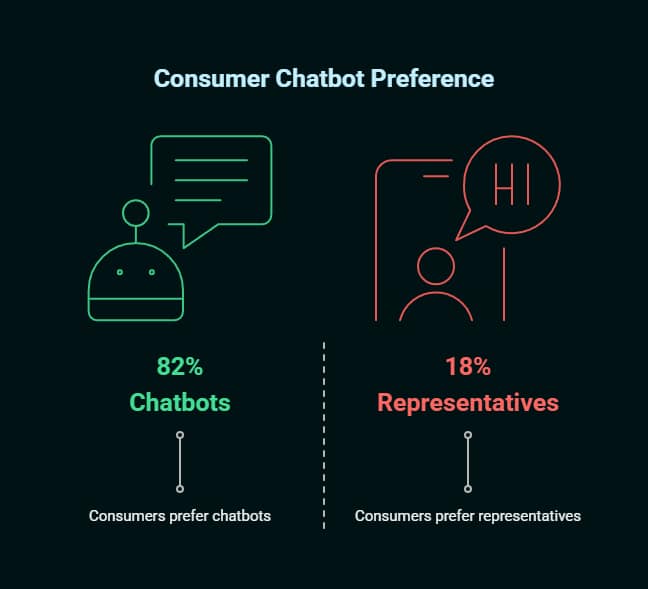
Recent Statista data reveals that 82% of consumers prefer using chatbots instead of waiting for customer representatives, a trend that directly translates to employee preferences for internal support systems. In work settings, these trends are more pronounced where employees deal with multiple priorities and need solutions immediately.
The impact extends beyond mere convenience. Organizations report that employee experiences using Artificial Intelligence (AI) automation tools are improving productivity and reducing support tickets, while engagement scores see a rise. While conversational AI chatbots and virtual assistants can both optimize the employee experience, careful consideration of your specific workplace will help you choose one and determine how to implement it.
Conversational AI Chatbots: The Efficient Digital Workforce
Real-World Implementation And Performance
For six months, we piloted AI chatbot solutions in various departments. It revealed several patterns that show what chatbots can and cannot do in employee support. Our HR Chatbot, using Microsoft Bot Framework, has dealt with 78% of usual employee queries without human intervention.
The implementation process revealed valuable insights about chatbots. To start off, I set our system to five basic areas of support for employees: help desk, IT requests, HR policy questions, Payroll queries, office facilities management, and compliance training bookings. Within just a month, the chatbot managed over 2,400 employee interactions and did so with an average response time of 3.2 seconds.
Key Chatbot Capabilities That Proved Most Valuable
- Employees could ask for specific policy, safety, or compliance information, and receive fast, accurate responses (with citations) to find exactly what they need.
- Automated Work Flow trigrams: Easy service requests, such as password resets, equipment orders, or requests for time off, were automatically processed.
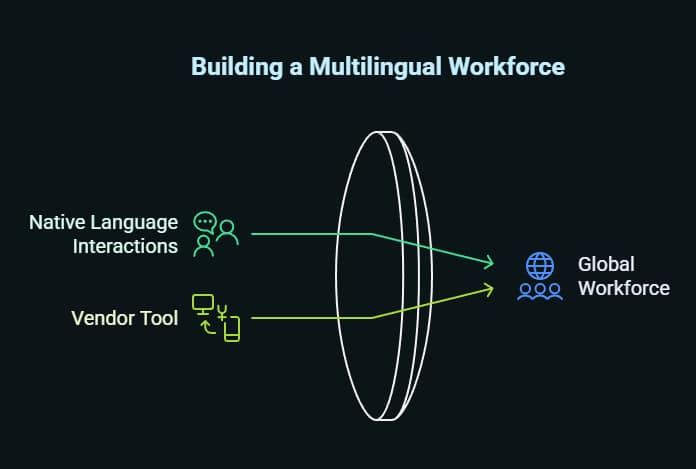
- We used native language interactions in 12 languages to have a global workforce, and our vendor used a certain tool to make that happen.
- Linking with existing structures: Linking with our HRIS, ticketing system, and knowledge base took away the data silo or competition.
Chatbot Limitations In Complex Scenarios
Yet, chatbot limitations became evident during more advanced employee interactions. Our marketing team asked the chatbot to assist in a campaign planning project. The chatbot struggled with context-dependent queries and multi-step project guidance. The chatbot was great at getting information, but not at giving advice or helping with difficult problems.
I’ve captured a range of examples where chatbots run out of their ability to be useful:
- Chatbots could churn out the standard policy text, but cannot offer interpretation or advice for different situations.
- The chatbot couldn’t handle multi-team requests that need cross-departmental collaboration.
- Employee concerns about workplace conflicts or career guidance needed human empathy and judgment.
These limitations don’t take away from their value; they help clarify their best use as part of wider employee experience strategies.
Virtual Assistants: Strategic Digital Teammates
Advanced Capabilities And Integration
Though virtual assistants are sometimes confusingly branded, I found their capabilities to be fundamentally different from chatbots. When we deployed IBM Watson Orchestrate for our finance team, the assistant helped by analyzing expense patterns and suggesting improvements, but also answered questions. It also analyzed past data to help with predictions.
Virtual Assistant Strengths Demonstrated In Workplace Testing
- The assistants remembered more. When you asked for help with a project, they were able to consider what you had said before.
- Suggesting Ideal Resource Allocation and a Calendar to Work Assistants Expanded the Range of Referenceable Ideas.
- I performed a complex, multi-step workflow that required analysis, report generation, and communication with stakeholders.
- Learning performed better over time, as assistants learned individual employee preferences and work patterns.
Real-World Virtual Assistant Implementation Results
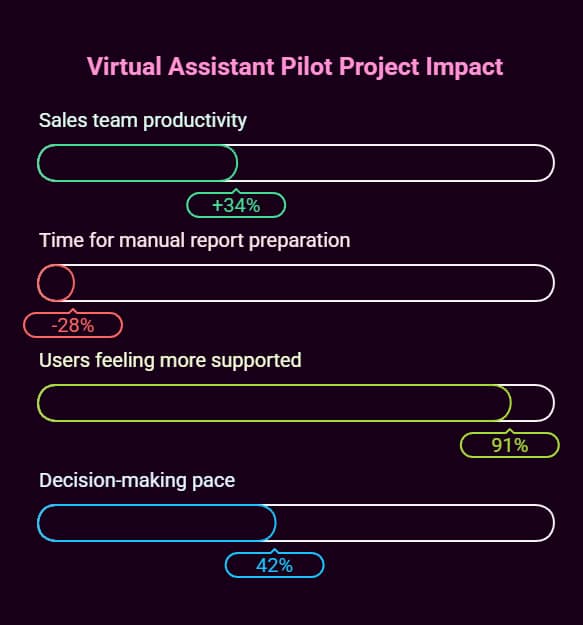
Our pilot project for a virtual assistant lasted three months in the sales and operations teams:
- Sales team productivity increased qualified leads processed per sales representative by 34%
- 28% decrease in the time for manual report preparation.
- Most of the users, about 91% reported feeling more supported to do their work.
- Decision-making pace: 42% quicker resolution of complex operational issues
The virtual assistant connects to our CRM, project management tools, and business intelligence platforms and creates a single workplace where employees can get complete support through natural language.
Head-To-Head: Conversational AI Chatbot Vs Assistants Employee Experience
Deployment Complexity And Resource Requirements
The complexity of the deployment changes considerably when both solutions are implemented simultaneously. On average, it takes around three to four weeks to deploy a chatbot with basic functionality. The integration of a chatbot into existing communication apps for business is usually quite straightforward. For example, chatbots can be integrated into existing Slack or MS Teams. Virtual assistants are demanding 8-12 weeks for deployment due to complex integrations.
Resource Comparison From My Implementation Experience
Comparing Chatbots and Virtual Assistants Key Differences:
| Feature | Chatbots | Conversational AIs / Virtual Assistants |
|---|---|---|
| Initial setup time | 3-4 weeks | 8-12 weeks |
| IT resources needed | 1-2 developers | 3-5 specialists |
| Data preparation | Moderate effort | Quite challenging to prepare for training |
| Maintenance | Low (updating rules) | High (continuous learning and optimization) |
| Ease of integration | Simple APIs | Deep system integrations |
Employee Adoption And Satisfaction Metrics
User surveys and analytics tracking showed different adoption patterns. In the first month, chats achieved 89% employee adoption. This was due to chatbots being simple and immediately useful. In just three months, 76% of users adopted virtual assistants, yet those who have full adoption reported more satisfaction.
Employee Feedback Revealed Critical Insights
- Chatbots were preferred for simple tasks needing an instant solution.
- Virtual assistants are now essential for problem-solving and planning.
- Those who used both solutions scored 23% higher overall on productivity metrics than those who used just one solution.
Research from arXiv highlights that the evaluation of conversational AI systems depends on user experience, information retrieval capabilities, linguistic quality, and artificial intelligence sophistication. Use this multi-dimensional assessment framework to choose between chatbots and assistants for specific workplace use cases.
Industry Applications And Business Impact Analysis
Healthcare And Remote Work Optimization
While consulting continuous healthcare organizations, I noticed a clear difference between chatbot and virtual assistant applications. Hospital workers required immediate access to protocol information, summary patient data, and compliance with regulations. Both solutions offered key benefits in this area.
Healthcare Implementation Insights
Chatbots performed particularly well for point-of-care protocol lookups, drug interactions, and scheduling. Nurses could easily check the procedures for infection control or patient allergens without disrupting their care.
Virtual assistants showed great value in managing complicated cases, reviewing data in a patient’s history to suggest treatment, and coordinating care teams. The assistant helped the doctors make decisions quickly because it synthesized information from multiple sources and provided them with recommendations.
Financial Services And Compliance Management
The financial services implementations proved that accuracy and regulatory compliance are extremely important for conversational AI systems. As we worked with a mid-size investment firm, we found that the chatbots manage routine compliance queries effectively, while the virtual assistants were used for complex regulatory analysis and client communication strategies.
Due to the virtual assistant’s ability to analyze market data, create compliance reports, and provide personalized investment recommendations, substantial value was created for financial advisors. Nonetheless, the chatbot that’s available at all hours for simple questions from clients and requests for account info is also a must-have if you want to keep up the quality of service.
Strategic Implementation Framework For Maximum Employee Experience Impact
Hybrid Deployment Strategies
After conducting tests across various organizations, the most successful implementations mix conversational AI chatbots and virtual assistants. The combination of two methods maximizes their strengths and minimizes their weaknesses.
Optimal Hybrid Framework Components
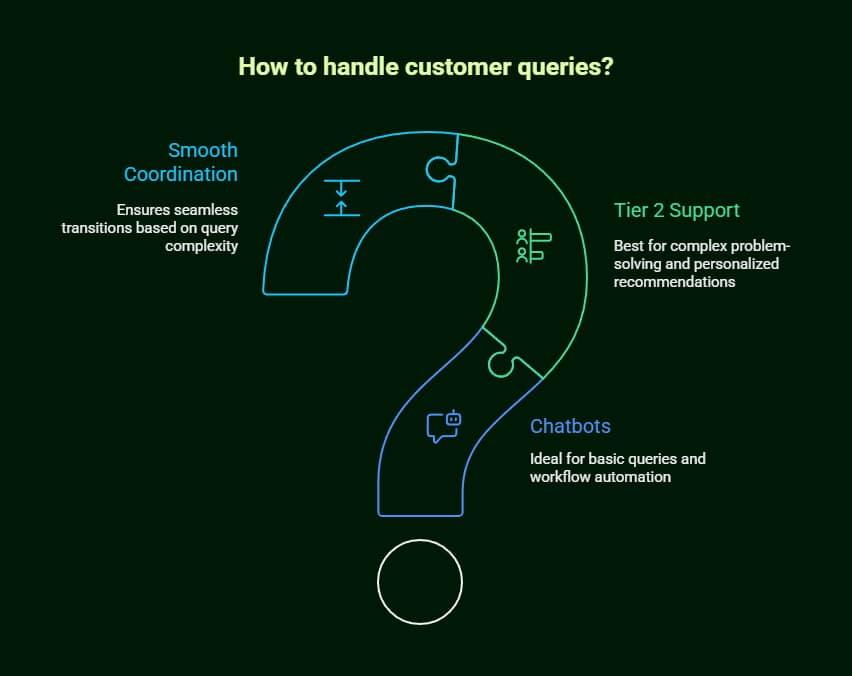
- Chatbots are used to manage basic queries, troubleshooting, and workflow automation in Tier One Support.
- Tier 2 support is for your complex problem-solving, strategic planning, and personalized recommendations.
- Smooth coordination between systems for smoother transitions based on query complexity and employee preference.
- The employee will be able to have a single conversation with an appropriate AI solution.
Technology Integration And Change Management
A successful deployment of AI requires consideration of now-available technology ecosystems and employee change management. Our end-to-end AI support system was integrated with Microsoft 365, Salesforce, and our bespoke HR platforms to create an employee experience that felt seamless and natural.
Critical Integration Considerations
- Employees can access the AI tools using their credentials without any further authentication barriers.
- Timely updates ensure the AI systems function with the latest employee and business information.
- Your personal employee data is secured by security protocols that ensure privacy.
- We continuously analyse the output of the system based on employee satisfaction.
Measuring Success: KPIs And ROI Analysis
Quantitative Performance Metrics
After using both chatbot and virtual assistant solutions across a large number of departments, certain metrics became useful indicators of improvement in employee experience.
Chatbot Performance Indicators
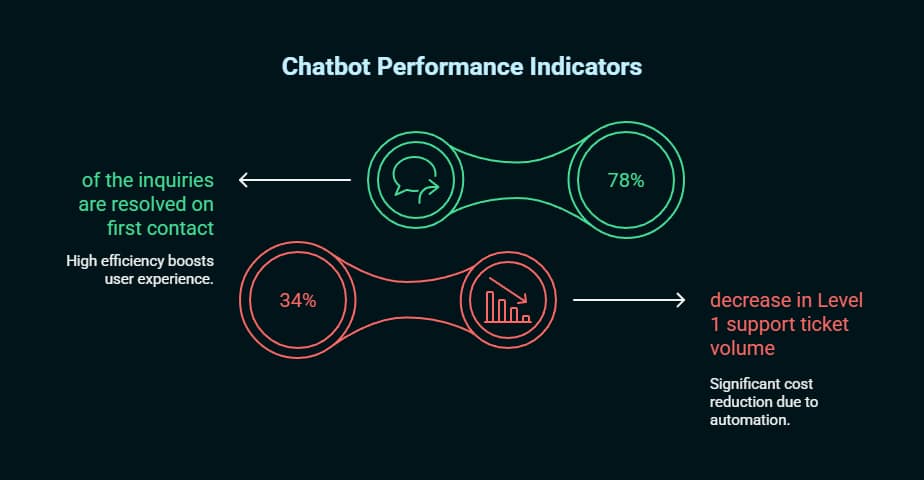
- For regular requests, 78% of the inquiries are resolved on first contact.
- The average response time for standard inquiries is 3.2 seconds.
- Users are satisfied with the site, rating it 4.2/5.0 for completing simple tasks.
- 34% decrease in Level 1 support ticket volume gives a cost reduction.
Virtual Assistant Performance Indicators
- 67% of the multi-step workflow was done successfully.
- Accuracy of recommendation rating – 89% of all strategic recommendations rated as helpful or very helpful.
- Time savings of 42% for research and analysis in complex projects.
- The engagement of the employee showed a 28% increase in the proactive use of the system in six months.
Qualitative Impact Assessment
The non-numerical insights suggest that there are ‘lessons’ that are not appreciated or seen. Employees frequently said they felt “more empowered” to perform strategic tasks using virtual assistants. Meanwhile, chatbots gave users “peace of mind” because help was always available instantly and reliably.
Employee Testimonials Highlighted Key Benefits
- According to the marketing manager, I can focus more on solutions to creative problems since the chatbot instantly addresses my routine questions.
- The digital assistant we use allows me to find insights I would never be able to do manually.
- A Remote Sales Rep stated that having 24/7 support via the chatbot eases his stress while working across time zones.
Future-Proofing Your Conversational AI Investment
Emerging Technologies and Capabilities
Every month, new capabilities are introduced to the conversational AI world. Based on my testing with beta versions from the major vendors, supplementary technical and market trends will probably impact future chatbot vs assistant decision in a big way.
Anticipated Developments
- The chatbot should support multimodal interaction, which includes voice, text, as well visuals in a single conversation.
- Predictive assistant is an AI solution that will help the employees without making a request.
- An improved ability to identify and respond to the emotional states and stress signals of their employees.
- AI responds in the same manner on any desktop, mobile, or IoT device.
Scaling Strategies And Organizational Readiness
Companies ready for AI should build a flexible infrastructure for present-day chatbot capabilities and future virtual assistants. There are no recommended maximums, and they are generally relative to the content.
Scaling Best Practices
- Focus on those that require less budget and experience.
- Before scaling to other divisions, develop clear measures of success.
- Make cross-functional teams internally rather than depend on vendors for complete support.
Overcoming Implementation Challenges And Resistance
Employee Adoption And Change Management
Employee resistance to AI-powered support systems was one of the biggest problems I faced during implementations. Initial surveys showed 43% of employees feared losing their jobs, and 31% of employees were worried about data privacy.
Effective Change Management Strategies
- Open Communication: Keep workers informed of everything from the goals of AI implementation to job assurances.
- Deployment department by department makes it easier for successes to be shared as well as for feedback to be incorporated.
- Training programs demonstrating that AI tools can be used to augment us instead of replacing us.
- Monthly surveys and focus groups captured employee concerns and suggestions.
Technical Integration Obstacles
Chatbots and virtual assistants had different integration challenges. You needed basic API connections for chatbots. For virtual assistants, you need deep integration with many business systems and data sources.
Common Technical Hurdles And Solutions
- Modern AI tools, which connected older HR and business systems, required custom middleware development.
- Problems with data quality: The employee data was inconsistent across different systems, which meant that a cleanup project was needed before any effective AI could be done.
- Financial and healthcare organizations required extensive security audits and custom encryption implementations.
- The website was optimized because of repeated high-volume usage and response time issues.
Cost Analysis And Budget Planning
Total Cost Of Ownership Comparison
Through a detailed financial analysis of our AI implementations, we were able to identify cost patterns for chatbot versus virtual assistant solutions. By understanding the differences between results and benefits, organizations can budget based on expected benefits.
Chatbot Cost Structure (Annual)
- Mid-size organizations spend about $15,000-$25,000 for licensing and platform fees.
- Development and Customization may need an initial setup of $30,000-$45,000.
- Ongoing annual expenditures for maintenance and updates range from $8,000-$12,000.
- The first year, training and change management cost $5,000-$10,000.
Virtual Assistant Cost Structure (Annual)
- Licensing for platforms and AI models fees (45k-75k)
- The first installation of integration and customization costs $75,000-$120,000.
- $25,000–$40,000 per year for continuous optimization and training.
- Development of new features $15k-25k.
ROI Calculation Framework
Improvements in productivity, reduced support costs, and increased employee satisfaction saw a positive ROI from chatbot and virtual assistant implementations within 18 months. The timeline and scale of value realization greatly differed.
Chatbot ROI Timeline
- For the first three months, they could produce more and faster because there were fewer support tickets.
- Between months 4 to 8, there will be measurable time savings as employees adopt routine task automation.
- Month 9-18: Full ROI achieved through continued efficiency gains.
Virtual Assistant ROI Timeline
- The first six months involve gradually adapting to the new change plan with low immediate impact.
- By month seven, levels of productivity increase greatly as those new tools are applied by those employees.
- By this time, the ROI will be considerable, as complex decision-making and automation of complex tasks will be more mature.
Security, Privacy, And Ethical Considerations
Data Protection And Compliance Requirements
When using chatbots, protecting employee data and adhering to regulations must be considered. Data security became a big concern during our deployment, especially in healthcare and financial services environments requiring special treatments.
Critical Security Considerations
- Data of employees is encrypted end-to-end and stored safely.
- Role-based permissions ensured employees could only access appropriate information through AI systems.
- Audit trails were used to create AI interaction logs for compliance reporting and security monitoring.
- Regulatory norms must be complied with when framing the data retention policies.
Recent research highlights potential risks in conversational AI systems, particularly regarding false memory formation and suggestive interactions. This research paper highlights the importance of careful design of conversation flows and disclosure of the limitations of AI systems.
Ethical AI Implementation Guidelines
The implementation plan must consider ethical ideas that go beyond technical security, which include AI explanation, bias avoidance, and employee autonomy.
Ethical Framework Components
- Tell chat participants when they are dealing with an AI system instead of a human agent.
- Regularly check AI suggestions and answers for bias against different groups or jobs.
- Staff members can choose to speak with a human and not with the artificial intelligence system in sensitive situations.
- Checking that AI systems do not favor any one employee group or job role.
Maximizing Your Conversational AI Investment
Choosing between a conversational AI chatbot v/s an assistant for employee experience depends on your organization’s requirements, current infrastructure, and strategic objectives. I’ve seen organizations that are most successful in the real world and have been able to implement in real life don’t go with one solution or the other. They use both and create an ecosystem to support their employees.
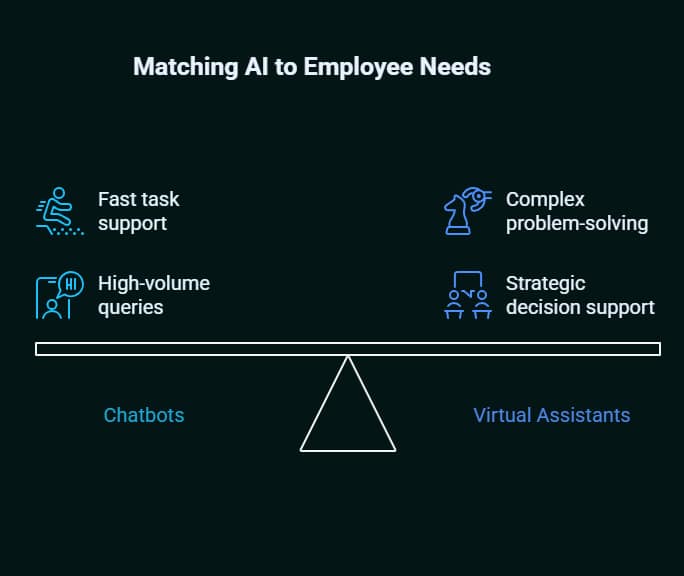
Chatbots offer fast, dependable support for everyday tasks and high-volume queries. Meanwhile, virtual assistants allow for the use of advanced capabilities for complex problem-solving and strategic decision support.
A 40% boost in performance identified by research from Harvard Business School comes not from employing the latest and greatest AI but rather from marrying the right technology with the right employee needs.
The organizations that set up flexible hybrid implementations today will be in the best shape to harness new capabilities for conversational AI technology as it evolves, while also facilitating the employee experience upgrades they have made already. It’s important to start with the right success metrics. So, focus on employee adoption and build human capability-enhancing systems rather than replacing humans.
Regardless of whether you start with chatbots for quick wins or virtual assistants for long-term strategic advantage, what truly matters is starting your conversational AI journey with a good understanding of your employees’ real needs and what technology can realistically achieve.


